

Cupping therapy (拔罐, bá guàn) is a Traditional Chinese Medicine (TCM) treatment that uses suction cups to lift the skin and muscle, ease tension and improve local circulation. It is most often used for neck, shoulder and back stiffness, muscle soreness after exercise, and stress. A session usually takes 10 to 20 minutes, with cups left on for 5 to 15 minutes. Round marks are normal and fade within a few days to two weeks. Research suggests cupping may help some types of pain, but the evidence is still limited. It is not suitable during pregnancy over the abdomen or lower back, or for people with bleeding disorders or broken skin.
What is cupping therapy?
Cupping is a TCM therapy in which glass, silicone, plastic or bamboo cups are placed on the skin and a partial vacuum is created inside them. The suction draws the skin and the tissue beneath it up into the cup. Cups are usually placed on the back, shoulders, neck or legs, either on acupuncture points or over tight muscles.
In TCM, cupping is used to move qi and blood, release stagnation, and expel cold and dampness. A classic TCM saying sums up the idea: 不通则痛,通则不痛, or “where there is blockage there is pain; where there is free flow there is no pain.”
In Singapore, cupping is offered by registered TCM physicians, often together with acupuncture, tuina massage or herbal medicine.
How does cupping work?
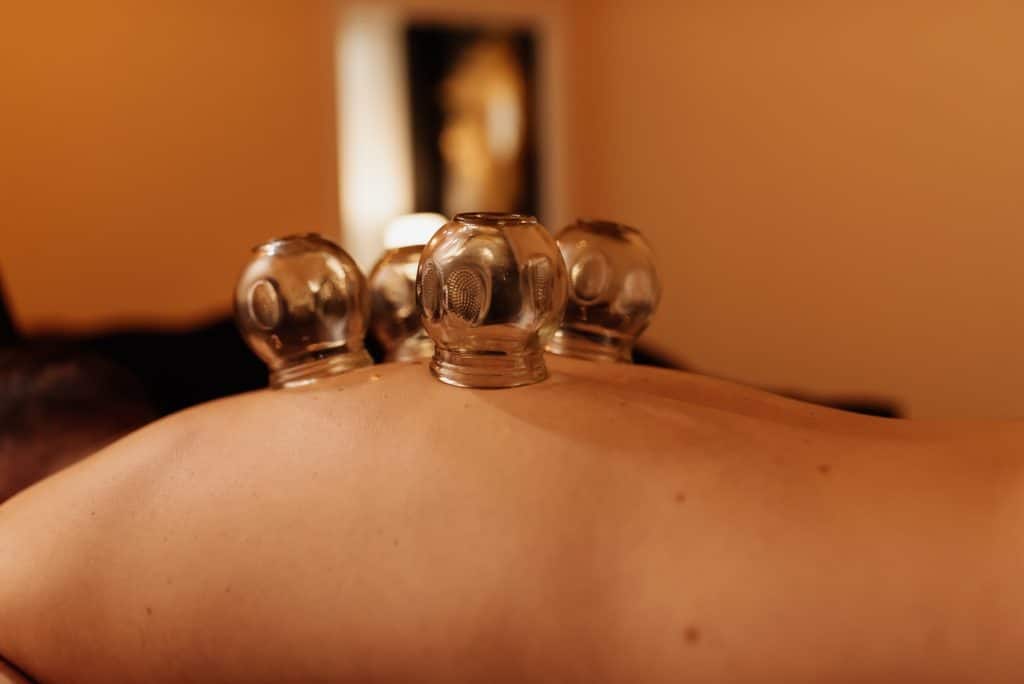
Cupping works differently from massage. Massage presses tissue down; cupping lifts it up. This lifting stretches the fascia (the connective tissue around muscles), widens small blood vessels near the surface, and stimulates nerves in the skin.
Researchers think these effects may explain why many people feel looser and less sore afterwards: more local blood flow, a temporary change in how the nervous system processes pain, and a relaxation response. The exact mechanisms are still being studied, and they do not involve “pulling toxins out” through the skin.
The 5 main types of cupping
| Type | How it works | Often used for | What it feels like |
|---|---|---|---|
| Dry (stationary) cupping 留罐 | Cups stay in place for 5–15 minutes | Chronic neck, shoulder and back tightness | Steady pulling; most relaxing type |
| Moving (sliding) cupping 走罐 | Oil is applied and cups glide along the muscles | Large areas of tension, desk-related stiffness | Strong stretch; can be intense over knots |
| Flash cupping 闪罐 | Cups are applied and removed quickly, many times | Sensitive patients, cold and flu-like aches | Light, rhythmic pulling; few marks |
| Fire cupping 火罐 | A flame briefly heats the air inside a glass cup to create suction | Cold-type pain and stiffness in TCM | Warm, deep suction |
| Wet cupping 刺络拔罐 | The skin is lightly pricked with a sterile lancet before suction | Selected heat and blood-stasis patterns, at the physician’s discretion | Brief prick, then suction; a small amount of blood is drawn |
Fire and wet cupping should only be done by trained TCM physicians, because they carry a small risk of burns or infection if done incorrectly.
What can cupping help with?
People in Singapore most often come for cupping for:
- Neck, shoulder and upper back stiffness, especially from long hours at a desk or on a phone
- Lower back muscle tension from sitting, lifting or exercise
- Muscle soreness after training, such as running, gym, badminton or cycling
- Stress and tension, where many people find the session deeply relaxing
- TCM cold and damp conditions, such as a heavy, achy body or aches at the start of a cold
In TCM practice, cupping is also used as part of treatment for some respiratory complaints and skin complaints such as acne, usually alongside herbs or acupuncture rather than on its own. For stress-related tension, it pairs well with TCM acupuncture for stress.
What does the research say about cupping?
The evidence is encouraging for some types of pain, but most studies are small and of modest quality.
- A 2011 systematic review found cupping may reduce pain in conditions such as neck and low back pain, but said better trials were needed (Kim et al., 2011).
- An updated review of 135 randomised trials found cupping, often combined with other treatments, was linked to benefits for conditions such as herpes zoster, acne, facial paralysis and cervical spondylosis, while noting a high risk of bias in many studies (Cao et al., 2012).
- A 2018 systematic review of cupping in athletes found no clear evidence for or against its use, and called for higher-quality research (Bridgett et al., 2018).
In short: many people find cupping helps with muscle tension and pain, it is low risk when done properly, and it works best as part of a broader plan rather than a cure on its own.
What do cupping marks mean, and how long do they last?
Cupping marks are caused by the suction drawing blood into the tissue just under the skin. They are usually painless and are not the same as a bruise from an injury. How dark they get depends on suction strength, how long the cups stay on, the area treated and your skin.
| Mark colour | How long it usually lasts | How TCM traditionally reads it |
|---|---|---|
| Light pink or barely visible | A few hours to 1 day | Little stagnation |
| Bright red | About 3 days to 1 week | Heat or recent tension |
| Dark red or purple | Up to about 2 weeks | Longer-standing blood stagnation or cold |
| Tiny dots or small water blisters | Varies; tell your physician | Dampness, or suction left on too long |
Two things are important to know. First, a darker mark does not mean the treatment worked better or removed more toxins. Second, marks usually get lighter over repeated sessions as the area becomes less tight. If you have an event coming up, tell your physician which areas to avoid.
What to expect during a cupping session at G&G TCM
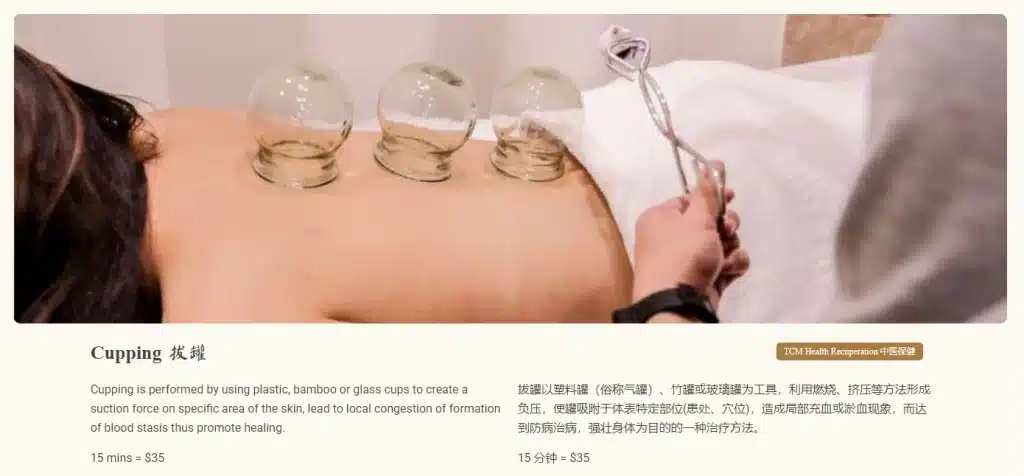
- Consultation: the physician asks about your symptoms, health history and medication, and checks your tongue and pulse to understand your TCM pattern.
- Preparation: you lie comfortably and the treatment area is exposed. Oil is applied if moving cupping is planned.
- Cupping: cups are placed or moved over selected points and muscles. You will feel pulling and tightness, which should not be painful. Tell the physician if it is too strong; suction can always be reduced.
- Removal: cups are released gently after 5 to 15 minutes. The whole session usually takes 10 to 20 minutes.
- Aftercare advice: you receive guidance on showering, activity and when to come back.
Cupping is often combined with tuina massage or acupuncture in the same visit for a deeper effect. If you are adding tuina to your session, here is what to expect during a tuina therapy session.
Cupping aftercare: what to do before and after
Before your session:
- Eat a light meal 1 to 2 hours before. Do not come very hungry, as this raises the risk of dizziness.
- Wear loose, comfortable clothing.
- Avoid alcohol beforehand.
After your session:
- Wait at least 2 hours before showering, and use warm, not cold, water.
- Keep the treated area covered and away from direct air-conditioning or fans for the rest of the day.
- Drink warm water and rest; avoid intense exercise and alcohol for the rest of the day.
- Do not scratch or rub the marks. Mild soreness for a day or two is normal.
- Leave the same area to recover until the marks have faded before having it cupped again.
How often should you do cupping?
For most muscle tension, once a week is a common starting point, with a review after 3 to 5 sessions. For maintenance or relaxation, many people come every 2 to 4 weeks. Your physician may suggest a different schedule depending on your condition and how your skin recovers.
Is cupping safe? Side effects and who should avoid it
Cupping is low risk when done by a trained TCM physician with clean equipment. Possible side effects include:
- Round marks and mild tenderness (common and expected)
- Light-headedness or fainting, especially if you are hungry, tired or anxious
- Small blisters if suction is strong or left on for long
- Burns (fire cupping) or infection (wet cupping) if not done correctly
Avoid cupping, or check with a physician first, if you:
- Are pregnant (the abdomen and lower back must be avoided)
- Have a bleeding disorder or take blood thinners such as warfarin
- Have broken skin, rashes, sunburn, infection or varicose veins over the area
- Have a high fever, are severely anaemic, or feel very weak
- Have serious heart disease, a pacemaker, or a recent blood clot
- Are frail, very elderly, or a young child (only gentle techniques should be used)
Cupping vs massage vs acupuncture vs gua sha

| Therapy | How it works | Best for |
|---|---|---|
| Cupping 拔罐 | Suction lifts skin and muscle | Broad areas of tightness, back and shoulders |
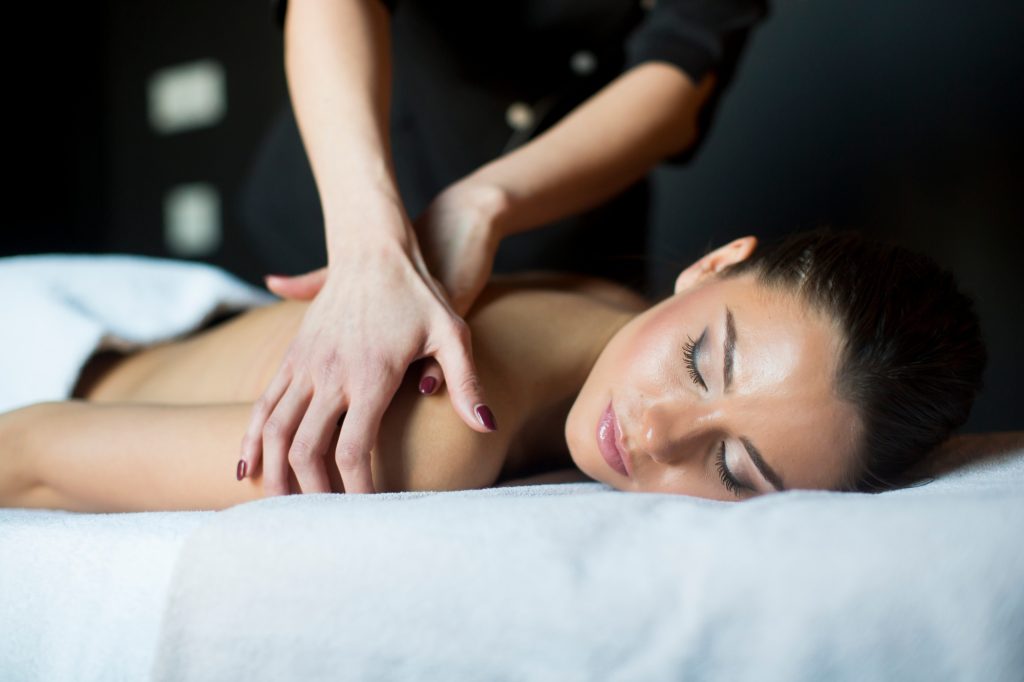
| Tuina massage 推拿 | Pressure and manipulation push into muscle | Knots, joint stiffness, posture-related pain |
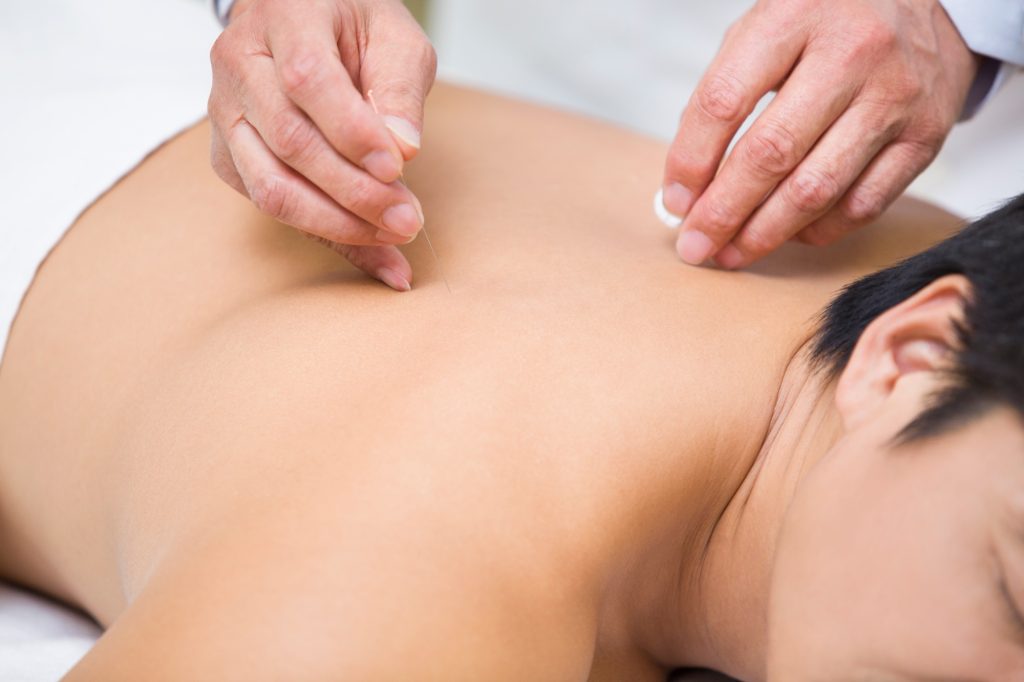
| Acupuncture 针灸 | Fine needles at specific points | Pain plus internal issues such as stress, sleep or digestion |
| Gua sha 刮痧 | Scraping with a smooth tool along the skin | Neck and shoulder tension, early cold symptoms |
These therapies are often combined. A TCM physician chooses based on your symptoms, not a fixed package.
When to see a doctor instead
Cupping is not the right first step if your pain:
- Follows a fall, accident or sports injury with swelling or a possible fracture
- Comes with numbness, tingling or weakness in the arms or legs
- Is severe, getting worse, or wakes you at night
- Comes with fever, chest pain, breathlessness or unexplained weight loss
See a doctor first; TCM care can follow once serious causes are ruled out.
Cupping therapy at G&G TCM
At G&G TCM, cupping is performed by our TCM physicians after a consultation, and can be combined with tuina, acupuncture or herbal medicine as part of your treatment plan. A 15-minute cupping session is S$35. G&G TCM is open daily from 10 am to 8:30 pm (last appointment 8 pm). Book via WhatsApp at +65 8215 6878 or +65 8168 2062, or through our contact page.
FAQs Section
Is cupping painful?
Most people feel tightness and pulling, not pain. Moving cupping over tight knots can feel intense. Suction can always be reduced if it is uncomfortable.
How long do cupping marks last?
Usually from a few hours to about two weeks, depending on colour. Light pink marks fade within a day; dark red or purple marks can take up to two weeks.
Do darker cupping marks mean more toxins?
No. Mark colour reflects suction strength, treatment time and local circulation. A darker mark does not mean the treatment was more effective or removed toxins.
Can I shower after cupping?
Yes, but wait at least 2 hours and use warm water. Avoid cold showers, swimming and direct air-conditioning on the area for the rest of the day.
How often can I do cupping?
Once a week is common for muscle tension. Let marks on an area fade before cupping the same area again.
Can I exercise after cupping?
Light walking or stretching is fine. Avoid intense training on the same day, as the treated muscles may feel tender.
Is cupping safe during pregnancy?
The abdomen and lower back must be avoided during pregnancy. Always tell your physician if you are pregnant before any TCM treatment.
What is the difference between cupping and gua sha?
Cupping uses suction to lift the tissue; gua sha uses a smooth tool to scrape along the skin. Both aim to ease tension and improve circulation, and are often used together.
How much does cupping cost at G&G TCM?
A 15-minute cupping session at G&G TCM costs S$35. Your physician will advise during your visit if cupping should be combined with tuina, acupuncture or herbal medicine.
References
- Kim JI, Lee MS, Lee DH, Boddy K, Ernst E. Cupping for treating pain: a systematic review. Evidence-Based Complementary and Alternative Medicine. 2011;2011:467014. doi:10.1093/ecam/nep035
- Cao H, Li X, Liu J. An updated review of the efficacy of cupping therapy. PLoS One. 2012;7(2):e31793. doi:10.1371/journal.pone.0031793
- Bridgett R, Klose P, Duffield R, Mydock S, Lauche R. Effects of cupping therapy in amateur and professional athletes: systematic review of randomized controlled trials. Journal of Alternative and Complementary Medicine. 2018;24(3):208–219. doi:10.1089/acm.2017.0191
- Al-Bedah AMN, Elsubai IS, Qureshi NA, et al. The medical perspective of cupping therapy: effects and mechanisms of action. Journal of Traditional and Complementary Medicine. 2019;9(2):90–97. doi:10.1016/j.jtcme.2018.03.003
- National Center for Complementary and Integrative Health. Cupping