

Traditional Chinese Medicine (TCM) treats acne as a sign of internal imbalance, not only a pore problem. A TCM physician identifies your pattern, usually heat in the Lungs, damp-heat in the digestive system, phlegm and blood stasis, Liver qi stagnation, or Yin deficiency, using your tongue, pulse and where breakouts appear. Treatment combines herbal medicine, acupuncture and diet changes matched to that pattern. Most people see fewer inflamed spots within 4 to 8 weeks; stubborn or cystic acne usually needs 3 to 6 months. TCM can be used alongside dermatology care, but severe or scarring acne should be assessed by a doctor first.
What causes acne according to TCM?
In TCM, acne (粉刺, fěn cì) appears when heat, dampness or stagnation inside the body rises to the skin. The skin is governed by the Lungs, while digestion (the Spleen and Stomach), hormones and emotions (the Liver and Kidneys) decide how much heat and dampness the body produces.
Western medicine describes the same spots as clogged pores, excess sebum, C. acnes bacteria and inflammation. The two views are compatible. TCM adds a second question: why does this person keep producing inflamed spots in the same places? Common drivers in Singapore include hot, humid weather, spicy and fried food, sugary drinks, late nights, and work stress.
The 5 common TCM acne patterns
Most people have one main pattern, often mixed with a second. The table below shows how each pattern typically looks. Only a physician can confirm yours, because the tongue and pulse matter as much as the spots.
| Pattern | What the acne looks like | Common location | Other signs | Classic formula (physician-prescribed) |
|---|---|---|---|---|
| Lung wind-heat (肺经风热) | Small red papules, some blackheads, may itch | Forehead, nose, upper cheeks | Dry mouth, red tongue tip | Pi Pa Qing Fei Yin (枇杷清肺饮) |
| Stomach and intestine damp-heat (肠胃湿热) | Oily skin, yellow-headed pustules | Around the mouth, chin, chest, back | Bad breath, constipation or sticky stools, bloating, greasy yellow tongue coat | Yin Chen Hao Tang (茵陈蒿汤) |
| Phlegm-damp with blood stasis (痰湿瘀滞) | Deep, painful nodules or cysts; dark red or purplish; slow to heal; scarring | Jawline, cheeks, back | Long-standing acne, dark marks, purplish tongue | Er Chen Tang with Tao Hong Si Wu Tang (二陈汤合桃红四物汤) |
| Liver qi stagnation / hormonal (肝郁, 冲任不调) | Flares 5–7 days before a period or during stress | Chin, jawline, sides of the face | Irritability, breast tenderness, irregular cycles | Dan Zhi Xiao Yao San (丹栀逍遥散) |
| Yin deficiency with internal heat (阴虚内热) | Stubborn adult acne, less red but tender; dry, sensitive skin | Chin, jaw, neck | Poor sleep, night sweats, dry mouth; common after age 25 or with overwork | Zhi Bai Di Huang Wan (知柏地黄丸) |
These formulas are adjusted for every patient. Do not buy or combine them yourself: some are strongly cooling and can upset digestion, and several herbs are unsuitable in pregnancy.
Is it acne, rosacea or folliculitis?
Not every red bump is acne, and the treatment differs. Rosacea causes flushing and redness across the centre of the face, usually without blackheads, and worsens with heat, alcohol and spicy food. Fungal folliculitis shows as small, itchy, same-sized bumps on the forehead, chest or back, often after sweating, which is common in Singapore’s humidity. If your “acne” itches more than it hurts, mention it during your consultation.
What your acne location may tell you
TCM face mapping (面诊) links areas of the face to organ systems. It is a clue, not a diagnosis, and it is read together with the tongue and pulse.
| Zone | Associated system | Often linked to |
|---|---|---|
| Forehead | Heart, Lungs | Stress, late nights, Lung heat |
| Nose | Stomach, Spleen | Spicy, fried or rich food |
| Right cheek | Lungs | Lung heat, environmental triggers |
| Left cheek | Liver | Stress, emotional strain |
| Around the mouth | Stomach, Large Intestine | Damp-heat, constipation |
| Chin and jawline | Kidneys, Liver, hormones | Menstrual cycle, PCOS, Yin deficiency |
How TCM treats acne
TCM treatment works on two levels: herbs and body acupuncture correct the internal pattern, while local treatments calm the skin you can see.
1. Herbal medicine (中药)
Herbal medicine is the foundation of TCM acne care. A formula is built around your pattern to clear heat, drain dampness, move blood, or nourish Yin, and it is adjusted as your skin changes. Herbs commonly used for acne include:
- Clearing heat and toxins: Huang Qin (黄芩, scutellaria), Jin Yin Hua (金银花, honeysuckle), Pu Gong Ying (蒲公英, dandelion), Pi Pa Ye (枇杷叶, loquat leaf)
- Draining dampness: Yi Yi Ren (薏苡仁, Job’s tears), Fu Ling (茯苓, poria)
- Cooling and moving the blood: Zi Cao (紫草), Dan Shen (丹参), Chi Shao (赤芍)
- Nourishing Yin: Sheng Di Huang (生地黄), Mai Dong (麦冬), Xuan Shen (玄参)
Your formula is reviewed at each follow-up visit and adjusted as your skin and overall pattern change.
2. Acupuncture (针灸)
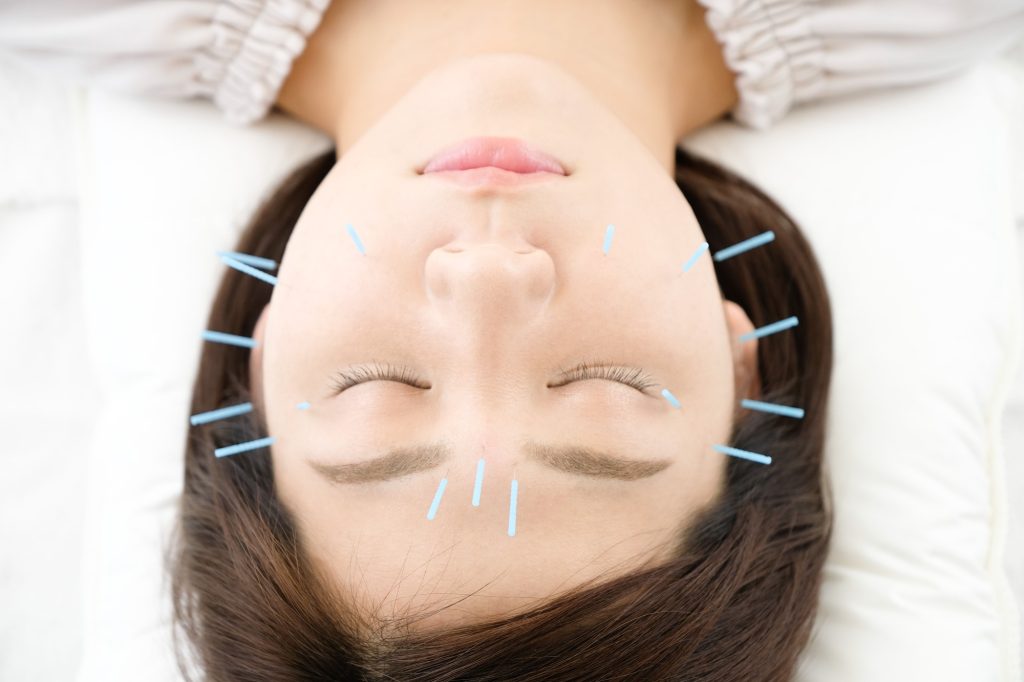
Acupuncture uses very fine, single-use needles to regulate the internal pattern, reduce inflammation and ease stress, a common acne trigger. Points often used include Quchi (LI11) and Hegu (LI4) to clear heat, Zusanli (ST36) and Neiting (ST44) for digestion, Xuehai (SP10) for the blood, and Taichong (LV3) for stress and hormonal flares. Points are chosen per patient; some, such as LI4 and SP6, are avoided in pregnancy.
A 2018 systematic review of 12 randomised trials found that acupuncture and related therapies gave acne improvement rates similar to standard medication and were well tolerated, although the authors rated the evidence as low quality (Mansu et al., 2018). Larger, better-designed trials are still needed.
3. Cupping and gua sha

For heat and stagnation patterns, cupping on the upper back helps move qi and blood and release heat from the channels linked to the Lungs and Stomach. Gentle facial gua sha can reduce puffiness and support lymphatic drainage, but it is never done over active pustules or cysts.
4. Facial acupuncture and TCM facial care
Once active breakouts settle, facial acupuncture, herbal masks and gentle massage can help even out texture, calm redness and support collagen in areas with shallow scarring.
TCM vs Western acne treatment
The two approaches answer different questions, and many patients use both.
| Western dermatology | TCM | |
|---|---|---|
| Focus | Pores, oil, bacteria, inflammation | Internal pattern behind recurring breakouts |
| Common options | Benzoyl peroxide, topical retinoids, oral antibiotics, hormonal pills, spironolactone, isotretinoin | Herbal formula, acupuncture, cupping, diet therapy |
| Speed | Often faster for severe inflammation | Gradual; 4–8 weeks for first changes |
| Common drawbacks | Dryness, sun sensitivity, gut effects of long antibiotic courses; isotretinoin needs blood tests and strict pregnancy prevention | Bitter herbs, weekly visits, needs consistency |
| Best suited to | Severe, nodulocystic or scarring acne | Recurring, hormonal or stress-linked acne; people who want to address triggers |
Can you combine TCM with Western acne medication?
Yes, in most cases, as long as both your doctor and your TCM physician know everything you take. Herbs can interact with medicines. If you are on isotretinoin (Roaccutane), which already requires liver monitoring, herbal prescriptions must be chosen with extra care. Acupuncture and diet changes are generally easy to combine with topical treatments.
How long does TCM take to clear acne?
Expect gradual change measured in skin cycles. Skin renews roughly every 28 days in young adults and more slowly with age.
- Weeks 1–4: Fewer new inflamed spots, less redness and pain. Digestion, sleep or premenstrual symptoms often improve first.
- Weeks 4–12: Breakouts become smaller and less frequent; cycle-linked flares are milder.
- Months 3–6: Typical timeframe for chronic, cystic or adult hormonal acne to stabilise.
- After clearing: Treatment spaces out to maintenance visits. Dark marks (post-inflammatory hyperpigmentation) can take 3–6 months or longer to fade.
Acne can return if triggers return, so TCM aims for long-term control rather than a one-off fix.
Diet and daily habits for acne-prone skin in Singapore
Diet is a pillar of TCM skin care because “heaty” and damp-forming foods feed the patterns behind inflamed acne.
Cut back on: durian, mala and chilli-heavy dishes, deep-fried hawker food, bubble tea and sugary drinks, alcohol, and, for some people, dairy.
Eat more of (if your digestion is not weak or cold):
- Lung heat: chrysanthemum or honeysuckle tea, cucumber, pear
- Damp-heat: unsweetened barley water, mung bean soup, winter melon soup, adzuki bean (赤小豆)
- Phlegm-damp: Job’s tears with poria, dried tangerine peel (陈皮) tea
- Yin deficiency: snow fungus and pear soup, lotus root
Stop cooling foods if they cause loose stools or stomach discomfort, and ask your physician which group fits you.
Daily habits: sleep before 11 pm, shower and change after heavy sweating, change pillowcases two to three times a week, wash your face gently twice a day, use non-comedogenic sunscreen, and do not squeeze spots. A simple skin diary of food, stress, sleep and your cycle helps your physician spot triggers quickly.
Acne scars and dark marks
The first goal is stopping new breakouts, because every inflamed spot can leave a mark. After that, blood-moving herbs and facial acupuncture may help red and brown marks fade faster and soften shallow texture. Deep ice-pick or boxcar scars usually need dermatology procedures such as lasers or microneedling, which can be combined with TCM.
Once breakouts are under control, the focus shifts to keeping skin even and bright. Our guide to Chinese herbs for glowing skin explains which herbs TCM uses to support circulation, hydration and a clearer complexion over the long term.
When to see a dermatologist first
See a doctor before, or alongside, TCM if you have:
- Deep, painful cysts or nodules, or acne that is leaving scars
- Sudden adult acne with irregular periods, excess hair growth or weight change (possible PCOS)
- Acne that started after a new medication or supplement
- Fever, spreading redness or swelling
- Acne that is seriously affecting your mood or confidence
What to expect at G&G TCM
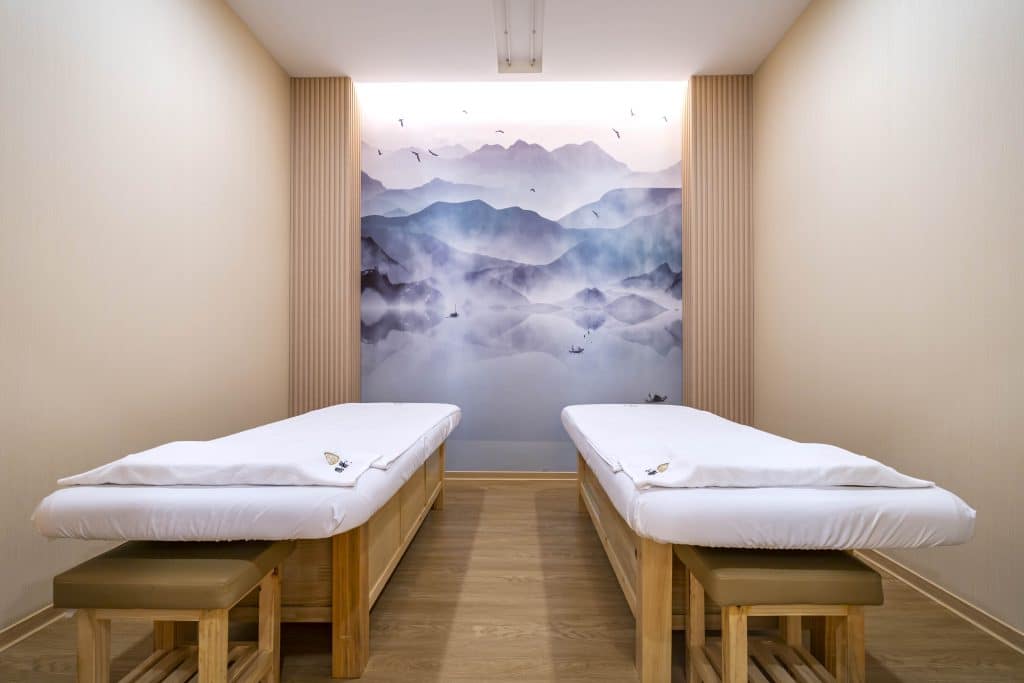
Every acne plan at G&G TCM starts with a full consultation by a licensed TCM physician.
- Consultation: the physician reviews your breakout history, diet, sleep, stress, cycle and any medication.
- Diagnosis: tongue and pulse examination, and a look at where and how your acne appears.
- Treatment plan: usually herbal medicine plus weekly acupuncture for the first 4 to 6 weeks, with diet guidance.
- Review: progress is checked at each visit and the formula is adjusted.
Bring along: a list of current medications and skincare, recent dermatology notes, and photos of your skin at its worst. Please tell us if you are pregnant or trying to conceive.
G&G TCM is open daily from 10 am to 8:30 pm (last appointment 8 pm). Book via WhatsApp at +65 8215 6878 or +65 8168 2062.
FAQs Section
Can TCM cure acne permanently?
No treatment can guarantee acne never returns. TCM aims for long-term control by correcting the pattern that keeps causing breakouts, so many patients have fewer and milder flares after treatment ends.
How long does TCM take to work for acne?
Most people notice fewer inflamed spots within 4 to 8 weeks. Chronic, cystic or hormonal acne usually needs 3 to 6 months of consistent treatment.
Does TCM help hormonal acne?
Yes, TCM is often used for jawline and chin acne that flares around the menstrual cycle. Treatment typically targets Liver qi stagnation or Yin deficiency and regulates the cycle at the same time.
Is acupuncture for acne painful?
The needles are much thinner than injection needles. Most people feel a brief prick, then warmth, heaviness or tingling.
Can I take Chinese herbs with isotretinoin or antibiotics?
Often yes, but only when your doctor and TCM physician both know what you take, because some herbs can interact with medicines or add strain to the liver.
What foods should I avoid for acne in TCM?
Heaty and damp-forming foods: durian, spicy and deep-fried food, sugary drinks, alcohol, and for some people dairy.
Is TCM safe during pregnancy?
Some herbs and acupuncture points are not safe in pregnancy. Always tell your physician if you are pregnant or trying to conceive so treatment can be adjusted.
Can TCM help with acne scars?
TCM may help red and dark marks fade and soften shallow texture. Deep scars usually need dermatology procedures, which can be combined with TCM.
References
- Mansu SSY, Liang H, Parker S, et al. Acupuncture for acne vulgaris: a systematic review and meta-analysis. Evidence-Based Complementary and Alternative Medicine. 2018;2018:4806734. doi:10.1155/2018/4806734
- Huang H, Liu Y, Wu S, et al. Current state of research on acupuncture for acne: a scoping review. Frontiers in Physiology. 2025;16:1661850. doi:10.3389/fphys.2025.1661850
- Chen HY, Lin YH, Chen YC. Identifying Chinese herbal medicine network for treating acne: implications from a nationwide database. Journal of Ethnopharmacology. 2016;179:1–8. PMID 26721214
- Law MP, Chuh AA, Molinari N, Lee A. An investigation of the association between diet and occurrence of acne: a rational approach from a traditional Chinese medicine perspective. Clinical and Experimental Dermatology. 2010;35(1):31–35. PMID 19549242
- National Center for Complementary and Integrative Health. Traditional Chinese Medicine: What You Need To Know
- Ministry of Health Singapore. TCM Practitioners