

The role of ba guan in TCM (Traditional Chinese Medicine) refers to how cupping therapy functions as a supportive technique to stimulate circulation, release stagnation, and restore internal energy flow. Ba Guan, commonly known as cupping, is not simply a surface-level muscle therapyit is rooted in meridian theory and the philosophy of Qi regulation. Within the broader TCM system, ba guan is often applied alongside acupuncture, herbal prescriptions, and lifestyle adjustments to create a more comprehensive healing approach.
In modern integrative wellness discussions, the role of ba guan in TCM is increasingly recognised for its ability to support detoxification, reduce muscular tension, and enhance overall vitality without relying solely on medication.
Understanding the Role of Ba Guan in TCM
The role of ba guan in TCM is closely connected to the concept of Qi flow and blood circulation. When Qi becomes stagnant, often due to stress, poor posture, fatigue, or environmental exposure, physical discomfort and internal imbalance may arise. Ba guan therapy uses controlled suction on the skin to encourage movement of both blood and energy through meridians.
Key philosophical foundations include:
- Qi Regulation – Encouraging smooth energy flow.
- Meridian Activation – Stimulating internal organ pathways.
- Yin–Yang Harmonisation – Restoring equilibrium.
- External–Internal Connection – Addressing both muscle and organ-related imbalance.
Rather than being an isolated technique, ba guan is typically integrated into a wider treatment plan, making the role of ba guan in TCM both functional and complementary.
How Ba Guan Therapy Works in Practical Settings
Within the framework of Traditional Chinese Medicine (TCM), Ba Guan, also known as cupping therapy, is viewed not merely as a physical technique, but as a method for restoring the body’s natural balance of Qi (vital energy) and improving blood flow. This perspective highlights the role of Ba Guan in TCM as more than surface-level muscle treatment; it is considered part of a broader holistic wellness approach. In modern practice, it is often applied through a combination of traditional philosophy and contemporary anatomical understanding.
1. Suction and Circulation
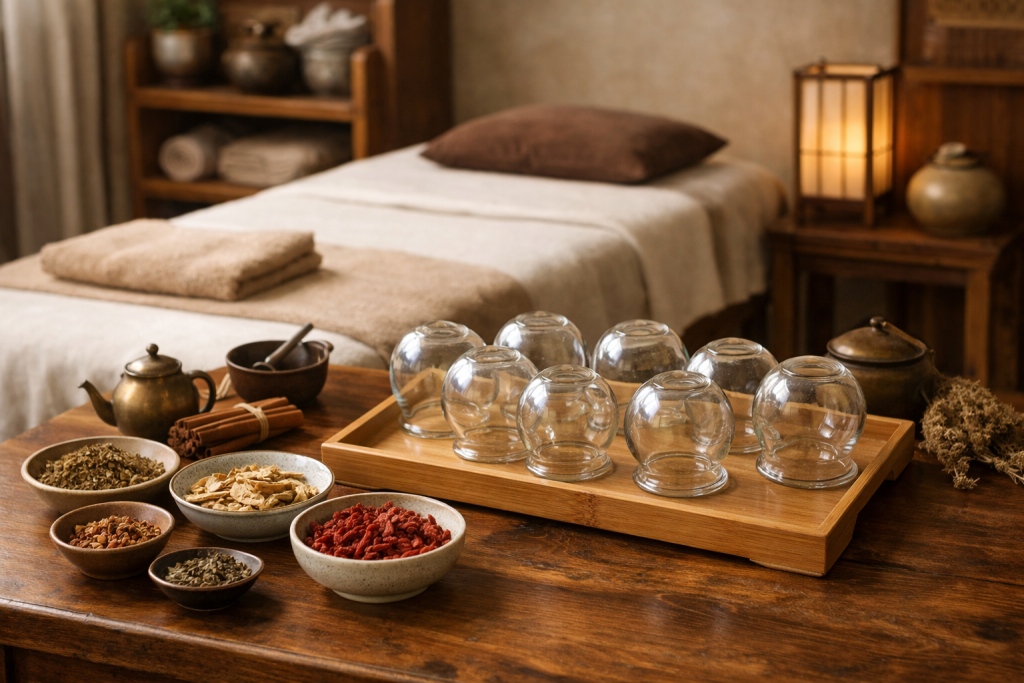
Ba Guan uses cups made of glass, plastic, or silicone that are placed on specific areas of the body to create gentle vacuum pressure.
From a TCM perspective, this suction is believed to release stagnation of Qi and blood, which is often associated with muscle tension and discomfort.
In practical terms, the vacuum effect increases localized blood circulation, delivering more oxygen and nutrients to tight or stressed tissues. Many individuals describe a warm or light sensation after therapy, which practitioners interpret as a sign that energy flow is beginning to rebalance, an explanation frequently used to describe the role of Ba Guan in TCM for promoting internal harmony.
2. Detoxification Support
The term “detoxification” in Ba Guan does not mean the literal extraction of toxins from the body. Instead, within TCM philosophy, it refers to supporting the body’s natural elimination and regulatory systems, including lymphatic circulation.
The gentle pressure created by the cups can stimulate fluid movement beneath the skin and may help reduce minor fluid retention in certain areas. From a natural body balance standpoint, Ba Guan is considered a supportive stimulus that encourages the body’s own self-healing and self-regulating mechanisms rather than acting as an instant cure.
3. Muscle Relaxation and Pain Relief
One of the most commonly reported benefits of Ba Guan is muscle relaxation and reduced discomfort. Athletes, office workers, and individuals with sedentary lifestyles frequently note improved flexibility and a lighter sensation in previously tense areas after a session.
In TCM theory, pain is often linked to blocked or stagnant Qi and blood flow. By opening these stagnated pathways, Ba Guan is believed to help the body return to a more harmonious state. From a modern physiological perspective, improved circulation and the release of soft-tissue tension provide a practical explanation for the sense of relief many people experience.
Overall, Ba Guan is not regarded as a “magical cure,” but rather as a traditional therapeutic tool aimed at supporting natural body balance through physical stimulation, enhanced circulation, and the energetic principles of TCM. Its effectiveness can vary depending on individual conditions, consistency of treatment, and integration with a healthy lifestyle.
Pro Tip: Hydration after cupping sessions can help the body recover more comfortably and support circulation benefits.
Core Benefits Commonly Associated with Ba Guan
- Improved blood circulation
- Reduction of muscular tension
- Support for respiratory conditions
- Enhanced immune response
- Stress and fatigue relief
- Faster muscle recovery after physical activity
These benefits explain why the role of ba guan in TCM extends beyond pain management into preventive wellness strategies.
Comparative Overview of Ba Guan Within TCM Therapies
| Therapy | Primary Focus | Method | Typical Purpose |
|---|---|---|---|
| Ba Guan (Cupping) | Circulation & stagnation release | Suction cups | Muscle tension, detox support |
| Acupuncture | Energy regulation | Fine needles | Pain, stress, organ balance |
| Herbal Medicine | Internal correction | Plant formulas | Digestion, immunity, fatigue |
| Tui Na Massage | Structural alignment | Manual pressure | Joint mobility, relaxation |
| Moxibustion | Warmth stimulation | Heat therapy | Cold conditions, energy boost |
This integrated perspective highlights that the role of ba guan in TCM is not competitive but cooperative with other modalities.
Modern Interest and Clinical Curiosity
The resurgence of cupping therapy in sports medicine and wellness culture has drawn broader attention to the role of ba guan in TCM. International sporting events and rehabilitation programs have occasionally showcased athletes with cupping marks, sparking curiosity about its mechanisms.
Health research institutions such as the National Center for Complementary and Integrative Health (NCCIH) have published educational resources discussing cupping as part of complementary health practices, contributing to more informed public awareness.
Step-by-Step Experience of a Typical Ba Guan Session
- Consultation & Assessment – Practitioner evaluates body constitution and symptoms.
- Target Area Identification – Back, shoulders, or legs are common locations.
- Cup Placement & Suction – Cups remain for 5–15 minutes.
- Removal & Observation – Temporary circular marks may appear.
- Aftercare Guidance – Hydration, rest, and light stretching advised.
During structured treatment journeys, personalised approaches sometimes incorporate herbal guidance similar to ba guan for heatiness, especially when internal heat imbalance is observed.
Why Many Individuals Explore Ba Guan Therapy
Several lifestyle patterns contribute to rising interest:
- Prolonged desk work and posture strain
- Fitness recovery needs
- Stress-related muscle tension
- Preventive wellness awareness
- Cultural appreciation of traditional healing
As holistic health becomes more mainstream, the role of ba guan in TCM is increasingly viewed as both therapeutic and educational, helping individuals understand body signals before discomfort escalates.
Integrating Ba Guan Into Broader Wellness Strategies
Understanding the role of ba guan in TCM also involves recognising how it fits into lifestyle balance. Many wellness journeys naturally begin with foundational knowledge available through GNG TCM, where holistic education and practitioner-guided therapy philosophies are consistently emphasised. In practical treatment pathways, cupping is frequently paired with targeted TCM cupping therapy services to ensure that pressure intensity, placement, and duration align with individual health profiles.
Pro Tip: Scheduling cupping sessions during periods of lower physical strain often enhances recovery comfort and maximises circulation benefits.
Conclusion – The Role of Ba Guan in TCM for Sustainable Natural Balance
The role of ba guan in TCM extends beyond visible cup marks or short-term muscle relief. It represents a broader philosophy of circulation enhancement, preventive wellness, and personalised care. When integrated with acupuncture, herbal medicine, and lifestyle guidance, ba guan becomes part of a sustainable strategy rather than a one-time remedy.
For individuals seeking a structured introduction to traditional therapies, professional consultation pathways and comprehensive treatment services provide clarity, confidence, and long-term balance support.
FAQs Section
Is ba guan painful?
Most individuals describe it as mild pressure rather than pain.
Are the marks permanent?
No. Marks typically fade within several days.
How often should sessions occur?
Frequency varies depending on condition and practitioner advice.
Can ba guan be combined with acupuncture?
Yes, integrated sessions are common in TCM clinics.
Who should avoid cupping?
Pregnant individuals, those with skin infections, or bleeding disorders should consult healthcare professionals first.