

TCM pain management is a Traditional Chinese Medicine approach that aims to relieve pain by addressing the body’s underlying imbalances, Qi and Blood circulation, meridian pathways, and physical tension. Depending on the condition, TCM practitioners may use therapies such as acupuncture, Tuina, cupping, or herbal medicine.
Unlike approaches that focus only on the location of pain, TCM considers the wider condition of the body. This makes it a popular complementary option for people experiencing back pain, neck and shoulder tension, joint discomfort, sports injuries, and recurring muscle pain.
What Is TCM Pain Management?
TCM pain management focuses on understanding why pain occurs and what may be contributing to it.
In Traditional Chinese Medicine theory, pain may occur when the normal flow of Qi and Blood is disrupted. This can be associated with injury, muscle tension, overuse, lifestyle factors, or internal imbalances.
A TCM consultation may therefore consider:
- Pain location and characteristics — Where the pain occurs and whether it feels sharp, dull, heavy, or aching.
- Duration of symptoms — Acute and long-term pain may require different treatment approaches.
- Lifestyle — Work habits, posture, exercise, stress, and sleep can all be relevant.
- Overall constitution — TCM treatment is personalised according to the individual’s condition.
Pro Tip: The same type of pain can have different underlying patterns, so personalised assessment is more useful than choosing a treatment based only on the diagnosis.
Common Conditions Managed With TCM
TCM therapies are commonly used to support people experiencing various types of musculoskeletal discomfort.
Back Pain
Long hours of sitting, poor posture, physical strain, and previous injuries can contribute to back pain. TCM may help address muscle tension, stiffness, and circulation around the affected area. For a more detailed explanation of how TCM approaches back-related discomfort, read our guide to TCM for back pain.
Neck and Shoulder Pain
Desk work and prolonged screen use can cause tightness around the neck, shoulders, and upper back. Targeted treatment may help reduce tension and improve mobility.
Knee and Joint Pain
Joint discomfort can develop from overuse, injury, or age-related changes. TCM may be used as a complementary approach to help manage discomfort and stiffness.
Sports Injuries
Muscle strains, stiffness, and other sports-related discomfort may benefit from therapies such as Tuina, acupuncture, or cupping, depending on the injury and assessment.
Chronic Pain
For recurring pain, TCM takes a broader approach by considering symptoms, lifestyle, physical tension, and the individual’s overall condition rather than focusing only on temporary relief.
How Does TCM Explain Pain?
A central concept in TCM is the relationship between Qi, Blood, and meridians.
When Qi and Blood are believed to flow smoothly, the body can maintain better balance. When this flow becomes disrupted, practitioners may describe the condition as stagnation or blockage.
Common TCM patterns associated with pain include:
| TCM Pattern | Common Characteristics |
|---|---|
| Qi and Blood stagnation | Fixed or sharp discomfort, often associated with tension or injury |
| Qi deficiency | Discomfort accompanied by tiredness or weakness |
| Cold and Dampness | Heaviness, stiffness, or discomfort that may feel worse in cold conditions |
| Localised tension | Tight muscles and restricted movement |
These patterns are assessed individually rather than assumed from symptoms alone.
What TCM Treatments Can Help With Pain?

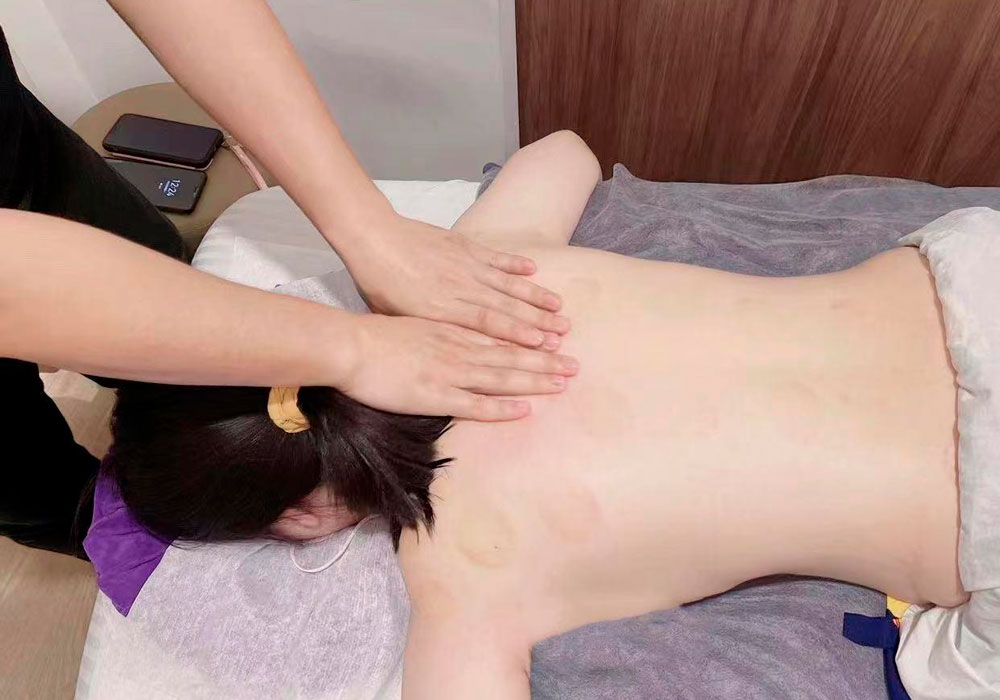
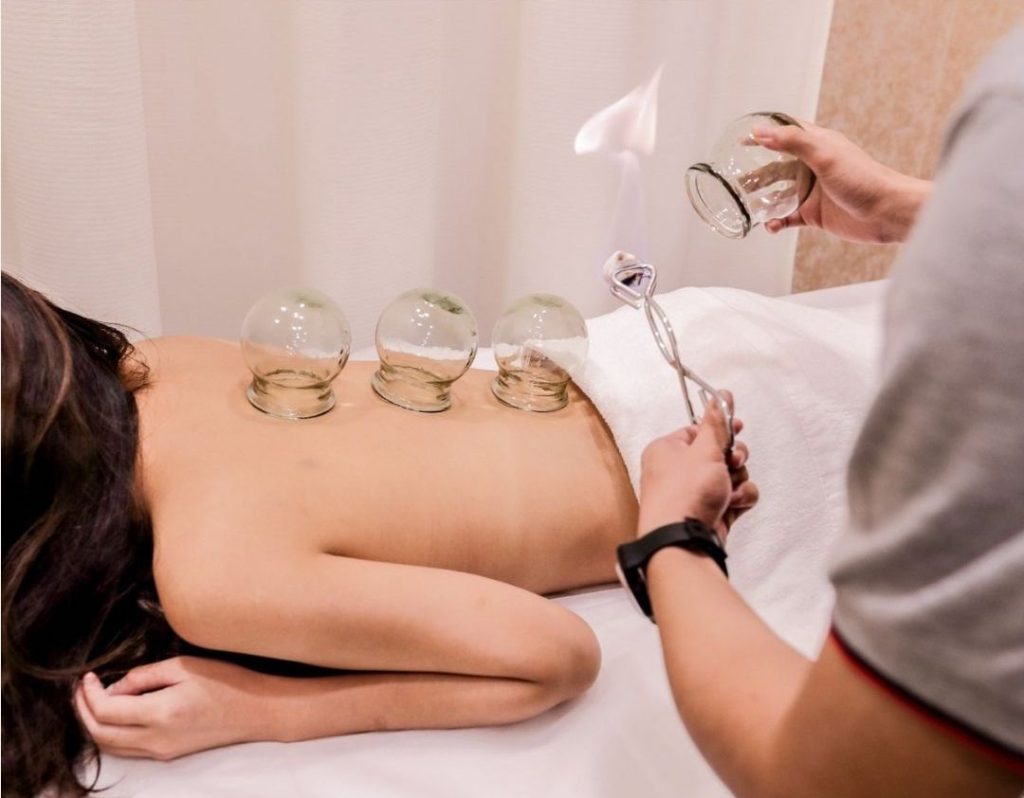
There is no single treatment that works for every type of pain. A practitioner may recommend one therapy or combine several approaches.
Acupuncture
Acupuncture uses fine needles at selected acupoints. It is commonly used in TCM to influence Qi and Blood circulation and support pain management.
Tuina
Tuina is a traditional Chinese therapeutic massage involving techniques such as pressing, kneading, rolling, and manipulation.
It can be particularly suitable when pain is accompanied by muscle tightness, stiffness, or restricted movement.
Cupping
Cupping uses suction cups on the skin and is traditionally used to stimulate circulation and address muscular tension.
Chinese Herbal Medicine
Personalised herbal formulas may be prescribed when a practitioner identifies an internal TCM pattern that may be contributing to the symptoms.
Pro Tip: Treatment selection should follow an assessment rather than simply choosing the most popular TCM therapy.
Benefits of TCM Pain Management
The potential benefits depend on the condition and treatment used. TCM may help support:
- Pain relief — Some TCM therapies have been studied for specific pain conditions.
- Muscle relaxation — Tuina and other hands-on techniques can target areas of physical tension.
- Mobility — Reducing stiffness may make everyday movement more comfortable.
- Relaxation and wellbeing — Pain and stress can reinforce each other, so relaxation can be an important part of overall pain management.
- Long-term management — Regular treatment combined with lifestyle changes may help people manage recurring discomfort.
Evidence varies between TCM therapies and different pain conditions, so treatment should be viewed as part of an appropriate overall healthcare plan.
Acute Pain vs Chronic Pain
The duration and cause of pain can influence the treatment approach.
Acute pain may occur suddenly following an injury, strain, or unusual physical activity. Before receiving treatment, it is important to determine whether medical assessment is required.
Chronic pain lasts or repeatedly returns over a longer period. TCM may take a more comprehensive approach, considering lifestyle, sleep, stress, physical tension, and overall constitution.
If pain keeps returning, simply treating the painful area may not be enough. Understanding possible triggers and contributing factors is equally important.
What Happens During a TCM Pain Management Session?
A professional consultation typically begins with understanding the patient’s symptoms and health history.
A typical treatment journey:
- Consultation — Discuss the pain, lifestyle, previous injuries, and relevant health concerns.
- TCM assessment — The practitioner evaluates the condition according to TCM principles.
- Treatment selection — Suitable therapies are recommended based on the assessment.
- Treatment — The selected therapy is performed according to the individual’s needs.
- Progress monitoring — The response to treatment can be reviewed and the approach adjusted.
Is TCM Pain Management Safe?
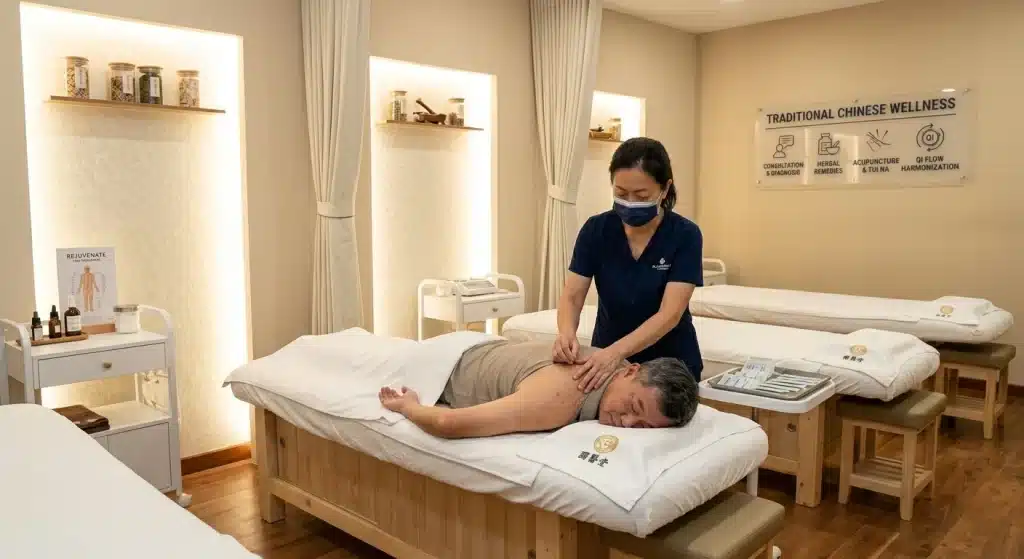
TCM treatments should be performed by appropriately qualified practitioners. In Singapore, patients can check whether a TCM practitioner is registered with the Traditional Chinese Medicine Practitioners Board (TCMPB).
It is also important to tell the practitioner about existing medical conditions, medications, previous injuries, and other relevant health information.
TCM should not replace necessary medical diagnosis or treatment, particularly when pain is severe, unexplained, or associated with warning signs.
Seek medical attention if pain is associated with:
- Serious injury or trauma
- Progressive weakness or numbness
- Loss of bladder or bowel control
- Fever or signs of infection
- Severe or unexplained pain
Pro Tip: Natural therapy can complement healthcare, but serious symptoms should always receive appropriate medical attention first.
How to Choose a TCM Pain Management Clinic
When choosing a clinic, consider more than convenience.
Look for:
- Registered practitioners — This provides an important professional standard in Singapore.
- Proper consultation — A good clinic should understand the condition before recommending treatment.
- Multiple treatment options — Different pain conditions may require different TCM approaches.
- Clear communication — Practitioners should explain the treatment and what patients can expect.
- Personalised care — Treatment should be adjusted according to the individual’s condition.
How to Support Pain Management Between Treatments
TCM treatment can be supported by simple daily habits.
- Move regularly — Avoid remaining in the same sitting position for prolonged periods.
- Improve posture — Proper workstation positioning can reduce unnecessary strain.
- Stretch appropriately — Gentle movement may help maintain flexibility.
- Sleep well — Quality sleep supports recovery and overall wellbeing.
- Manage stress — Emotional stress can contribute to muscle tension and affect how pain is experienced.
Conclusion: A Personalised Approach to Pain Management With G&G TCM
TCM pain management offers a holistic approach to managing pain by looking beyond the painful area and considering Qi, Blood, meridian pathways, muscle tension, lifestyle, and overall balance.
From back and neck pain to joint discomfort, sports injuries, and recurring muscle tension, different TCM therapies can be selected according to individual needs.
At G&G TCM, our approach focuses on understanding each patient’s condition before recommending a suitable treatment plan. This personalised approach helps ensure that the therapy selected is relevant to the individual’s symptoms and wellness goals.
If pain is affecting work, exercise, sleep, or everyday activities, a professional TCM consultation can help identify suitable options for managing the condition.
Explore G&G TCM’s services and speak with our practitioners to take the next step towards a personalised approach to pain management.
FAQs Section
What is TCM pain management?
TCM pain management uses Traditional Chinese Medicine principles and therapies to help relieve pain while addressing factors such as Qi and Blood circulation, meridian pathways, muscle tension, and overall body balance.
What is the best TCM treatment for pain?
There is no single best treatment. Acupuncture, Tuina, cupping, and herbal medicine may be used individually or together depending on the type of pain and the practitioner’s assessment.
Can TCM help with chronic pain?
TCM can be explored as a complementary approach for certain chronic pain conditions. The treatment plan depends on the cause, duration, symptoms, and individual constitution.
How many TCM sessions are needed for pain relief?
There is no fixed number. Some people may notice changes after an initial session, while recurring or long-term conditions may require a longer treatment plan.
Can TCM replace conventional pain treatment?
TCM should not automatically replace medical treatment. It can be used as a complementary approach when appropriate, particularly alongside proper medical evaluation for persistent or serious pain.