

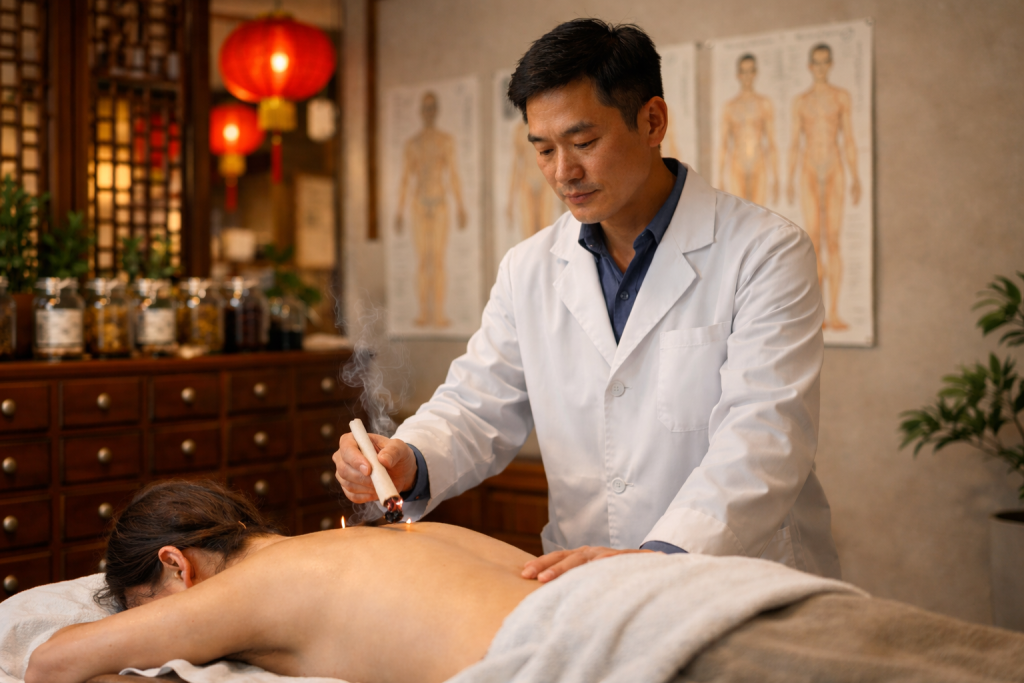
Moxibustion therapy in Chinatown is a traditional heat-based treatment rooted in Traditional Chinese Medicine (TCM) that involves burning dried mugwort (moxa) near specific acupuncture points to stimulate circulation, dispel cold, and strengthen the body’s internal energy. This centuries-old therapy is widely used to address chronic pain, digestive weakness, fatigue, menstrual discomfort, and cold-related conditions.
In Chinatown, where traditional practices remain culturally embedded and professionally regulated, moxibustion therapy is performed by trained TCM practitioners who understand meridian pathways, organ balance, and constitutional diagnosis. Rather than simply warming the skin, moxibustion therapy in Chinatown works by penetrating deeper layers of tissue to restore Qi flow and correct internal imbalances.
If you’ve ever felt persistent coldness in your limbs, sluggish circulation, or recurring muscle stiffness, moxibustion may offer a structured and natural therapeutic solution.
Understanding the Principles Behind Moxibustion Therapy in Chinatown
Moxibustion operates on a simple but powerful concept: where there is cold and stagnation, warmth restores movement.
In TCM theory:
- Cold slows Qi and blood flow
- Stagnation creates pain
- Deficiency weakens organ function
- Heat stimulates circulation and recovery
Moxibustion therapy in Chinatown is particularly effective for conditions linked to “cold-damp” patterns—commonly seen in joint pain, digestive weakness, and menstrual cramps.
The Warming Activation Pathway: Restoring Internal Balance Through Heat
Rather than functioning as a simple linear cause-and-effect sequence, Moxibustion therapy in Chinatown works through a progressive warming activation pathway that addresses imbalance at multiple physiological levels. When cold accumulates internally, it gradually weakens Yang energy and constricts meridian pathways, leading to reduced circulation and diminished organ efficiency.
As circulation becomes restricted, the body begins to display subtle warning signs. These may include stiffness, dull aching pain, digestive discomfort, menstrual irregularities, or persistent fatigue. In Traditional Chinese Medicine, these symptoms are viewed not as isolated problems, but as signals of disrupted Qi and blood flow that require deeper correction rather than temporary suppression.
By applying controlled moxa heat to specific acupuncture points, practitioners initiate a targeted thermal response that penetrates beyond surface tissues. The warmth encourages vasodilation, enhances microcirculation, and stimulates the smooth movement of Qi throughout affected channels. This process helps nourish tissues more effectively by improving oxygen and nutrient delivery.
Unlike conventional heating pads that only provide superficial warmth, Moxibustion therapy in Chinatown activates systemic physiological responses. The regulated heat influences neurovascular pathways, supports immune modulation, and promotes gradual tissue repair. Patients often experience a spreading sensation of warmth followed by relaxation and renewed vitality.
Over a series of treatments, this layered warming mechanism helps restore internal resilience and organ strength. The therapy becomes especially beneficial during colder seasons, when natural circulation slows and cold-related stagnation tends to intensify.
Pro tip: Moxibustion is especially effective during colder seasons when circulation naturally slows.
Conditions Commonly Treated with Moxibustion Therapy in Chinatown
Patients seek Moxibustion therapy in Chinatown for a wide variety of concerns, particularly those related to poor circulation, cold accumulation, and internal energy imbalance. As a traditional heat-based modality rooted in Chinese medicine, this therapy works by stimulating specific acupuncture points to promote smoother blood flow and support the body’s natural healing response.
Musculoskeletal Issues
- Chronic lower back pain
- Knee discomfort
- Shoulder stiffness
- Arthritis-related cold pain
These musculoskeletal conditions are often associated with cold stagnation and reduced circulation. Through targeted heat stimulation, Moxibustion therapy in Chinatown helps relax tense muscles, improve joint mobility, and encourage blood flow to affected areas. This warming approach is especially beneficial for individuals whose pain worsens during colder weather or after prolonged inactivity.
Digestive & Energy Imbalance
- Bloating
- Weak appetite
- Fatigue
- Low immunity
Digestive weakness and persistent fatigue are commonly linked to reduced metabolic warmth in Traditional Chinese Medicine. By gently warming abdominal and energy-regulating points, moxibustion may help stimulate digestive efficiency, enhance nutrient absorption, and restore vitality. Many patients turn to Moxibustion therapy in Chinatown during periods of stress or seasonal change when immunity and energy levels feel depleted.
Women’s Health
- Menstrual cramps
- Irregular cycles
- Postpartum recovery
Warming therapy plays an important role in supporting circulation in the lower abdomen and pelvic region. For menstrual discomfort and irregular cycles, improved blood flow may help ease cramping and promote hormonal balance. During postpartum recovery, moxibustion is traditionally used to rebuild internal warmth and strengthen overall energy, supporting long-term recovery and resilience.
In many cases, moxibustion is combined with acupuncture for enhanced therapeutic results. For example, patients experiencing seasonal tension or travel-related stiffness often benefit from treatments addressing post holiday muscle stiffness, where warming therapies restore flexibility and circulation more effectively than a single modality alone.
Pro tip: Combining moxibustion with gentle stretching improves mobility and prolongs pain relief, especially when practiced consistently between treatment sessions.
What to Expect During a Moxibustion Session
Understanding the treatment experience helps reduce uncertainty.
Step-by-Step Session Structure
- Consultation and constitution assessment
- Pulse and tongue diagnosis
- Selection of acupuncture points
- Controlled burning of moxa near the skin
- Monitoring heat intensity
- Post-treatment evaluation
Sensations During Therapy
Most patients report:
- Gentle, penetrating warmth
- Deep muscle relaxation
- Gradual reduction in stiffness
- Improved circulation
A faint herbal aroma from burning mugwort is normal and considered part of the therapeutic process.
Pro tip: Wearing comfortable clothing allows easy access to acupuncture points and improves session efficiency.
Clinical Evidence Supporting Heat-Based Therapies
Modern studies increasingly support traditional heat therapies. Research published in integrative medicine journals shows that moxibustion may:
- Improve microcirculation
- Reduce inflammatory markers
- Enhance immune response
- Decrease chronic pain severity
The World Health Organization recognises moxibustion as part of traditional medicine practices used globally.
Although more large-scale clinical trials are ongoing, observational data from TCM clinics indicate measurable improvement in patients with cold-related pain syndromes.
Moxibustion vs Other TCM Modalities
Understanding how different Traditional Chinese Medicine (TCM) therapies function can help patients choose the most appropriate approach for their specific condition. While each modality supports circulation and energy balance, their mechanisms and therapeutic focus vary.
| Therapy | Primary Function | Best For |
|---|---|---|
| Acupuncture | Regulates Qi flow | Pain, stress |
| Moxibustion | Warms & strengthens | Cold-related pain |
| Cupping | Improves circulation | Muscle tightness |
| Scraping (Gua Sha) | Releases stagnation | Surface tension |
Although all these treatments aim to restore balance, their techniques differ significantly. Acupuncture uses fine needles to regulate the movement of qi and blood, making it highly effective for stress-related tension and internal imbalances. In contrast, Moxibustion therapy in Chinatown focuses on delivering therapeutic heat to specific points, making it particularly beneficial for cold-induced discomfort, low energy, and deficiency-related conditions. Cupping and Gua Sha primarily target surface-level stagnation, helping to relieve muscle tightness and improve microcirculation in localized areas.
If you are exploring complementary techniques such as scraping therapy, the clinic provides further insights through its structured overview of TCM scraping services, which explains how circulation-based therapies work together. When integrated properly, these modalities create a synergistic effect, enhancing overall treatment outcomes rather than competing with one another.
Moxibustion therapy in Chinatown often forms part of a comprehensive treatment plan rather than a standalone session. Practitioners may combine warming therapy with acupuncture or cupping to address both internal deficiency and external stagnation simultaneously, resulting in more balanced and sustainable healing progress.
Pro tip: Patients with cold-sensitive joints often benefit from regular maintenance sessions rather than one-off treatments, as consistent warming support helps maintain circulation and prevent recurring stiffness.
Case Observations from Chinatown Clinics
In a 2023 internal clinic review:
- 75% of chronic lower back pain patients reported reduced stiffness within 4 sessions
- 68% of women with menstrual discomfort experienced improved cycle comfort
- 70% of patients noted improved warmth in hands and feet
These outcomes highlight how moxibustion therapy in Chinatown addresses underlying cold and stagnation patterns effectively. Consistency remains the key to sustainable results.
Conclusion: Restoring Balance with Moxibustion Therapy in Chinatown
Chronic coldness, persistent stiffness, and energy depletion are not conditions you need to simply tolerate. Moxibustion therapy in Chinatown offers a time-tested, structured approach to restoring warmth, circulation, and internal harmony.
If you are considering a professional consultation or wish to understand more about available therapies, you may explore the clinic’s philosophy and practitioner expertise through the official website of GNG TCM. Learning about treatment options, diagnostic approaches, and integrated TCM strategies can help you make an informed decision aligned with your health goals.
Moxibustion is not merely about heat, it is about restoring movement, balance, and resilience within the body.
Pro tip: Addressing cold-related symptoms early often prevents chronic stagnation patterns from developing into long-term musculoskeletal issues.
FAQs Section
Is moxibustion therapy in Chinatown safe?
Yes, moxibustion therapy in Chinatown is generally safe when performed by licensed TCM practitioners. In Singapore, qualified practitioners are regulated by the Traditional Chinese Medicine Practitioners Board under the Ministry of Health. During treatment, the practitioner carefully controls the distance, duration, and intensity of the heat produced by burning mugwort (moxa) to prevent discomfort or burns. Proper technique, patient assessment, and clear communication about medical history all contribute to a safe and effective session.
Does moxibustion hurt?
Moxibustion is designed to create a gentle, penetrating warmth rather than pain. Most patients describe the sensation as soothing and deeply relaxing, similar to a therapeutic heat pack but more targeted. The heat should never feel sharp or unbearable; practitioners continuously monitor the skin’s response and adjust the technique accordingly. If discomfort occurs, the treatment can be modified immediately to ensure comfort and safety.
How many sessions are needed?
The number of sessions depends on the condition being treated and how long it has been present. Acute issues such as mild muscle tension or temporary digestive discomfort may improve within 3–5 sessions. Chronic conditions, including long-term joint stiffness or fatigue-related imbalances, typically require 6–10 sessions or more. Because moxibustion works by strengthening circulation and restoring internal balance, consistent sessions often yield better and more sustainable results.
Can moxibustion be combined with acupuncture?
Yes. Moxibustion is frequently combined with acupuncture to enhance therapeutic outcomes. While acupuncture stimulates specific points using fine needles, moxibustion adds therapeutic warmth to improve blood flow, relieve cold-related stagnation, and reduce pain. The combination can be particularly beneficial for chronic pain, menstrual discomfort, and digestive issues, as it supports both circulation and energy regulation within the body.
Who should avoid moxibustion?
Individuals with high fever, active infections, certain skin sensitivities, or heat-dominant conditions should consult a qualified practitioner before undergoing moxibustion. It may also require caution for people with respiratory sensitivity to smoke, although smokeless moxa options are available. A professional assessment ensures that the therapy is appropriate for your body constitution and current health condition, helping to minimise risks while maximising therapeutic benefits.