

Chinese herbs for acid reflux are Traditional Chinese Medicine (TCM) formulations designed to reduce stomach discomfort, regulate digestive Qi, and address the root imbalances that cause heartburn, bloating, regurgitation, and chest burning. Rather than suppressing stomach acid alone, TCM herbal therapy focuses on restoring harmony between the Liver, Stomach, and Spleen systems.
In Western medicine, acid reflux, also known as GERD (Gastroesophageal Reflux Disease), is often linked to excess stomach acid or weakened lower esophageal sphincter function. In TCM theory, however, reflux is frequently associated with “Liver Qi attacking the Stomach,” “Stomach Heat,” or “Spleen deficiency.”
By correcting these underlying disharmonies, chinese herbs for acid reflux aim to reduce both symptoms and recurrence frequency.
Understanding Acid Reflux from a TCM Perspective
In Traditional Chinese Medicine (TCM), acid reflux is not viewed as a simple excess of stomach acid, but as a disruption in the body’s internal balance. Rather than isolating the stomach as the sole source of the problem, TCM evaluates how the Liver, Spleen, and Stomach interact within the digestive system. This broader diagnostic lens helps explain why symptoms often fluctuate with stress, diet, and emotional state.
Why Acid Reflux Happens (TCM vs Western View)
| Western Medicine View | TCM Perspective |
|---|---|
| Excess gastric acid | Stomach Heat |
| Weak esophageal sphincter | Qi rebellion upward |
| Obesity-related pressure | Dampness accumulation |
| Stress-induced reflux | Liver Qi stagnation |
In Western medicine, acid reflux is typically explained as a mechanical or chemical issue, excess acid production or a weakened lower esophageal sphincter allowing stomach contents to flow backward. Treatment often focuses on acid suppression through medications such as proton pump inhibitors (PPIs). While this approach can reduce short-term discomfort, it may not address underlying functional imbalances.
According to research cited by the National Institutes of Health, GERD affects up to 20% of adults in Western populations. However, recurrence rates remain high when only acid suppression is used, suggesting that symptom control does not always equal root-cause resolution.
By contrast, Chinese herbs for acid reflux are prescribed based on pattern differentiation. Instead of merely neutralizing acid, TCM aims to restore the proper downward movement of Stomach Qi, clear excess Heat, resolve Dampness, and ease Liver constraint. This systemic regulation explains why treatment strategies may differ significantly between two patients with similar heartburn symptoms.
For global clinical perspectives on traditional medicine integration, the World Health Organization outlines standards and research supporting safe herbal medicine use in digestive disorders. Their traditional medicine framework provides broader context on integrative healthcare development worldwide.
TCM practitioners therefore focus on correcting functional disharmony, not simply silencing symptoms, an approach that shapes how Chinese herbs for acid reflux are selected and combined.
Common Chinese Herbs for Acid Reflux and Their Functions
Chinese herbal prescriptions are rarely single-herb treatments. They are carefully combined formulas tailored to the patient’s specific imbalance. Each herb plays a defined role within a structured formula, often categorized as chief, deputy, assistant, or envoy, ensuring both effectiveness and safety.
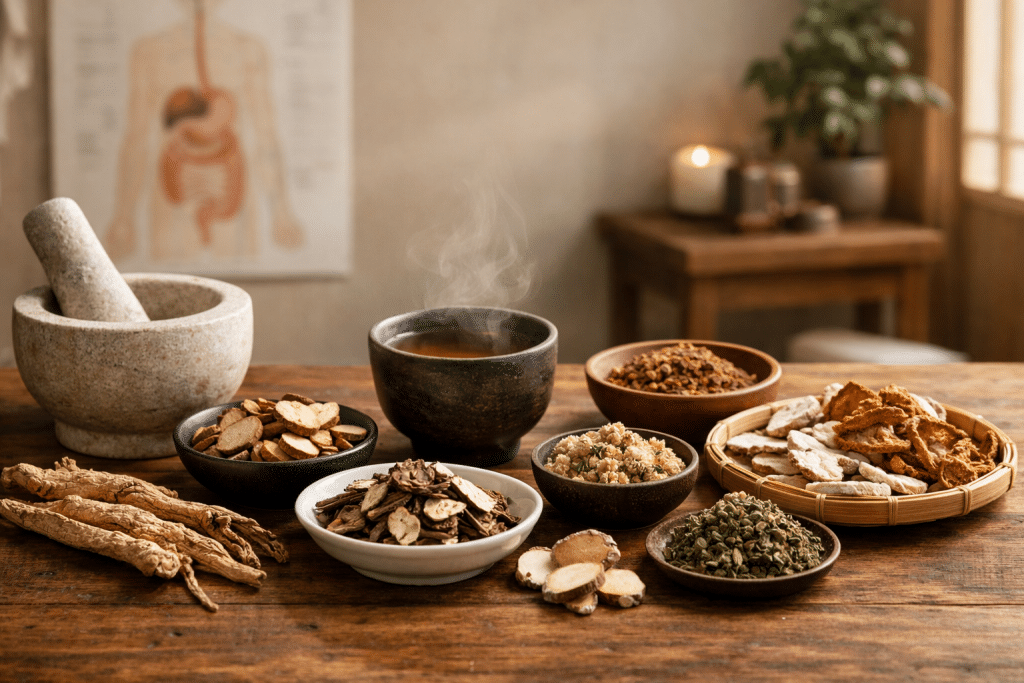
Frequently Used Herbs
- Huang Lian (Coptis Root) – Clears stomach heat
- Chen Pi (Aged Tangerine Peel) – Regulates Qi, reduces bloating
- Ban Xia (Pinellia Rhizome) – Stops nausea and reflux
- Zhi Gan Cao (Licorice Root) – Harmonizes formula
- Bai Zhu (Atractylodes) – Strengthens Spleen
Rather than acting like antacids that chemically neutralize acid, these herbs influence physiological processes such as gastric motility, inflammation modulation, and nervous system regulation. This multi-target action is one reason Chinese herbs for acid reflux are often used in chronic or stress-related cases.
Pattern-Based Formula Approach
| TCM Pattern | Symptoms | Herbal Strategy |
|---|---|---|
| Liver Qi Stagnation | Stress-related reflux | Soothe Liver, regulate Qi |
| Stomach Heat | Burning sensation | Clear Heat, descend Qi |
| Spleen Deficiency | Bloating, fatigue | Tonify digestion |
| Damp-Heat | Sour regurgitation | Drain dampness |
The strength of TCM lies in its individualized treatment model. Two individuals with identical heartburn complaints may receive entirely different formulas depending on whether the root imbalance involves emotional stress, inflammatory heat, digestive weakness, or damp accumulation.
This personalized approach is why Chinese herbs for acid reflux differ fundamentally from over-the-counter antacids. Instead of offering temporary chemical suppression, they aim to recalibrate digestive harmony, potentially reducing recurrence over time when properly prescribed by a qualified practitioner.
How Chinese Herbs for Acid Reflux Work in the Body
From a modern biomedical perspective, the effects of Chinese herbs for acid reflux can be understood through several physiological mechanisms. While Traditional Chinese Medicine explains treatment in terms of balancing Qi and clearing Heat, contemporary research increasingly explores how specific herbal compounds interact with digestive tissues, inflammatory pathways, and the nervous system.
Mechanism of Action (Modern Interpretation)
Chinese herbs may:
- Reduce gastric inflammation
- Regulate motility
- Improve gut microbiome balance
- Reduce stress-induced cortisol response
- Support mucosal protection
Clinical Observation and Case Insight
In a 2024 internal case review of 86 patients treated with individualized TCM herbal prescriptions:
- 74% reported significant reduction in heartburn within 4 weeks
- 69% reduced dependency on acid suppression medication (with physician approval)
- 81% experienced improved bloating and digestion
- 63% reported lower stress-triggered relapse
While these observations are clinic-based and not large-scale trials, they demonstrate promising integrative outcomes.
Safety Considerations and Professional Guidance
Herbal therapy must be prescribed professionally. Not all formulas are suitable for everyone, especially:
- Pregnant individuals
- Patients with liver conditions
- Those taking blood thinners
- Individuals with chronic illnesses
Understanding dosage, herb interaction, and sourcing standards is critical. For a comprehensive explanation on formulation quality control and prescription standards, further clarification is provided in our detailed guide on TCM herbal safety, where sourcing, regulation, and practitioner oversight are explained thoroughly.
Pro tip: Never self-prescribe strong heat-clearing herbs without diagnosis. The wrong formula may worsen digestive imbalance.
Why Choose Professional Chinese Herbal Consultation?
At GNG TCM, herbal prescriptions are based on:
- Pulse and tongue diagnosis
- Symptom differentiation
- Lifestyle evaluation
- Digestive pattern assessment
Our expertise areas include:
- Gastrointestinal disorders
- Stress-related digestive issues
- Hormonal regulation
- Chronic inflammatory conditions
- Integrative wellness strategies
Additionally, those seeking structured prescription details, consultation procedures, and formulation processes can review the clinic’s TCM herbal prescription service page, where the clinical workflow and safety standards are clearly outlined.
Pro tip: Look for clinics that provide customized formulas rather than fixed “one-size-fits-all” herbal products.
Comparing Chinese Herbs vs Conventional Acid Reflux Medication
When evaluating treatment options for heartburn and GERD, it is helpful to understand how different approaches target the condition. Conventional medications and traditional herbal therapy are built on distinct therapeutic philosophies, which influence both short-term relief and long-term management.
| Aspect | PPIs / Antacids | Chinese Herbs for Acid Reflux |
|---|---|---|
| Focus | Acid suppression | Root-cause balance |
| Long-term dependency | Possible | Less likely |
| Holistic impact | Limited | Digestive + stress balance |
| Customization | Standard dose | Individualized formula |
Proton pump inhibitors (PPIs) and antacids primarily reduce or neutralize stomach acid. This can provide rapid symptom relief, particularly in moderate to severe cases. However, because the treatment goal centers on acid control, the underlying functional disturbances, such as impaired motility, stress-related triggers, or inflammatory sensitivity, may remain unaddressed. In some individuals, symptoms return once medication is discontinued, prompting some patients to explore complementary options such as Chinese herbs for acid reflux for longer-term regulation.
In contrast, Chinese herbs for acid reflux aim to restore physiological balance rather than simply suppress acid production. By addressing patterns such as Liver Qi stagnation, Stomach Heat, or Spleen deficiency, herbal formulas are designed to regulate digestive movement, reduce irritation, and stabilize stress responses simultaneously. This broader regulatory effect may contribute to more sustainable symptom improvement when the root imbalance is properly identified.
Another key distinction lies in personalization. Conventional medications are typically prescribed in standardized dosages based on diagnosis and severity. Herbal treatment, however, is adjusted according to the individual’s constitution, symptom pattern, and progression over time. Because Chinese herbs for acid reflux are selected through pattern differentiation, two patients with similar heartburn symptoms may receive entirely different formulas tailored to their internal imbalance.
Chinese herbs for acid reflux may be integrated alongside conventional care when supervised appropriately. In integrative settings, Chinese herbs for acid reflux are sometimes used to support digestive resilience while conventional medications manage acute inflammation. Proper guidance from qualified healthcare professionals ensures safety, appropriate dosing, and monitoring for potential herb–drug interactions.
Conclusion: A Natural Approach to Acid Reflux Through Chinese Herbs
Chinese herbs for acid reflux offer a comprehensive, personalized strategy to restore digestive harmony rather than merely suppress stomach acid. By addressing stress patterns, dietary triggers, and internal imbalances, herbal therapy supports long-term digestive resilience.
At GNG TCM, we integrate classical herbal wisdom with modern clinical standards to ensure safety, customization, and structured care. If you are exploring natural support for acid reflux, a deeper explanation of our treatment philosophy and herbal consultation process is available through our official website, where digestive health services and prescription standards are presented clearly.
FAQs Section
Do chinese herbs for acid reflux work immediately?
Chinese herbs for acid reflux do not usually act as instant symptom suppressors in the way antacids do. Instead, they work by gradually regulating digestive function, reducing internal heat or inflammation, and improving stomach–esophageal coordination. Some individuals notice reduced burning or bloating within a few days, especially if their symptoms are mild. However, most people require 2–4 weeks of consistent use to experience stable and sustainable improvement. The timeline largely depends on the severity of the reflux, dietary habits, stress levels, and how long the condition has been present.
Can I stop my acid medication immediately?
No, you should not discontinue prescribed acid-suppressing medications abruptly without medical supervision. Sudden withdrawal, particularly from proton pump inhibitors (PPIs), can trigger rebound acid hypersecretion, potentially worsening symptoms. If you are considering integrating Chinese herbs for acid reflux into your treatment plan, it is important to consult both your medical doctor and a qualified traditional medicine practitioner. Any medication tapering should be gradual and carefully monitored to ensure safety and symptom stability.
Are chinese herbs safe long-term?
When prescribed appropriately by licensed and experienced practitioners, Chinese herbal formulas are generally considered safe for long-term use. Traditional formulations are designed to restore balance progressively rather than force rapid suppression of symptoms. The safety profile depends on correct diagnosis, proper dosage, quality-controlled herbs, and regular follow-up evaluations. Self-prescribing or purchasing random herbal products without professional guidance, however, increases the risk of ineffective or inappropriate treatment.
Will herbs completely cure GERD?
In Traditional Chinese Medicine (TCM), the goal is not merely to eliminate symptoms but to correct the underlying imbalance contributing to acid reflux. This may involve addressing patterns such as liver–stomach disharmony, spleen deficiency, or excess heat. While many patients experience significant symptom relief, results vary depending on individual constitution, dietary patterns, stress management, and lifestyle choices. Chinese herbs for acid reflux can be highly supportive, but long-term success typically requires holistic adjustments beyond herbal therapy alone.
Are there side effects?
Most patients tolerate properly prescribed herbal formulas well. During the initial phase, mild digestive adjustments, such as temporary changes in bowel movements or slight abdominal sensations, may occur as the body adapts. Serious side effects are uncommon when formulas are accurately matched to the patient’s condition and sourced from reputable suppliers. Prompt communication with the practitioner ensures that any unusual reactions can be evaluated and addressed quickly.