

Acupuncture for knee pain in Singapore is a Traditional Chinese Medicine (TCM) treatment that involves inserting fine, sterile needles into specific points on the body to relieve pain, reduce inflammation, and restore balance in the body’s energy flow (Qi). It is commonly used for conditions like osteoarthritis, ligament strain, and chronic knee discomfort, especially among aging adults and active individuals.
Unlike conventional treatments that often rely on medication or surgery, acupuncture offers a natural, non-invasive approach to managing knee pain while addressing the root cause rather than just symptoms.
Why Knee Pain Is So Common in Singapore
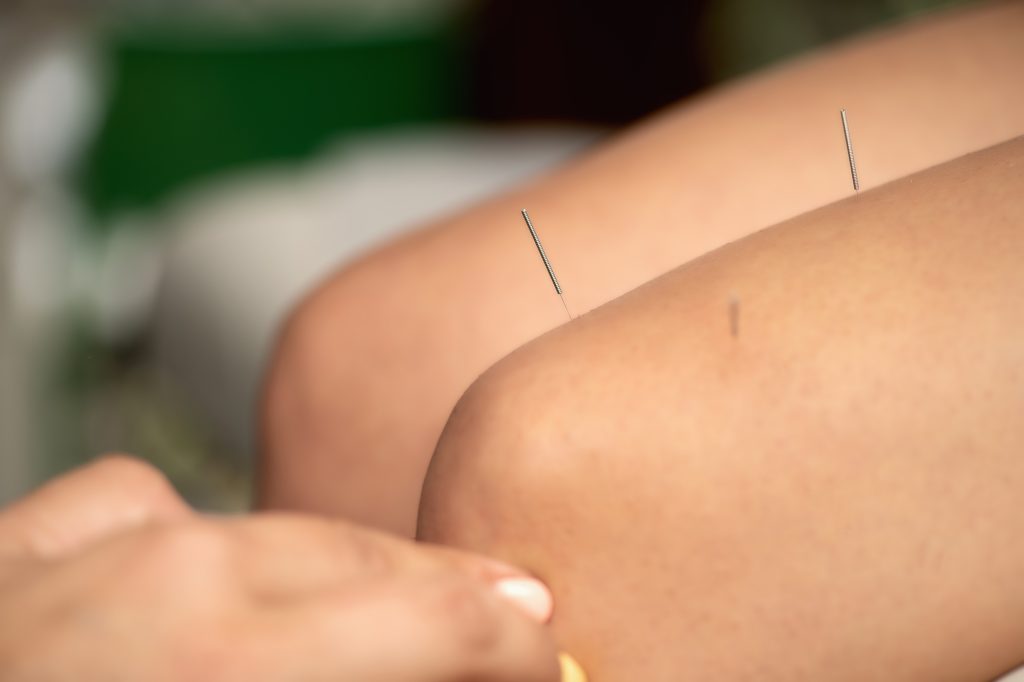
Knee pain is one of the most reported musculoskeletal issues in Singapore due to lifestyle and environmental factors:
- Sedentary office work leading to weak joints
- Aging population (especially 40+)
- High participation in sports like running and badminton
- Weight-related joint stress
Common Causes of Knee Pain
- Osteoarthritis
- Ligament injuries (ACL, MCL)
- Meniscus tears
- Tendonitis
- Post-surgical pain
Pro Tip: Early-stage knee pain responds better to acupuncture compared to chronic, untreated conditions.
How Acupuncture Works for Knee Pain Relief
Acupuncture is based on the principle of balancing the body’s internal energy (Qi). From a modern medical perspective, it works through several mechanisms:
Key Effects of Acupuncture
- Stimulates nerve endings → reduces pain signals
- Increases blood circulation → speeds up healing
- Releases endorphins → natural painkillers
- Reduces inflammation → improves mobility
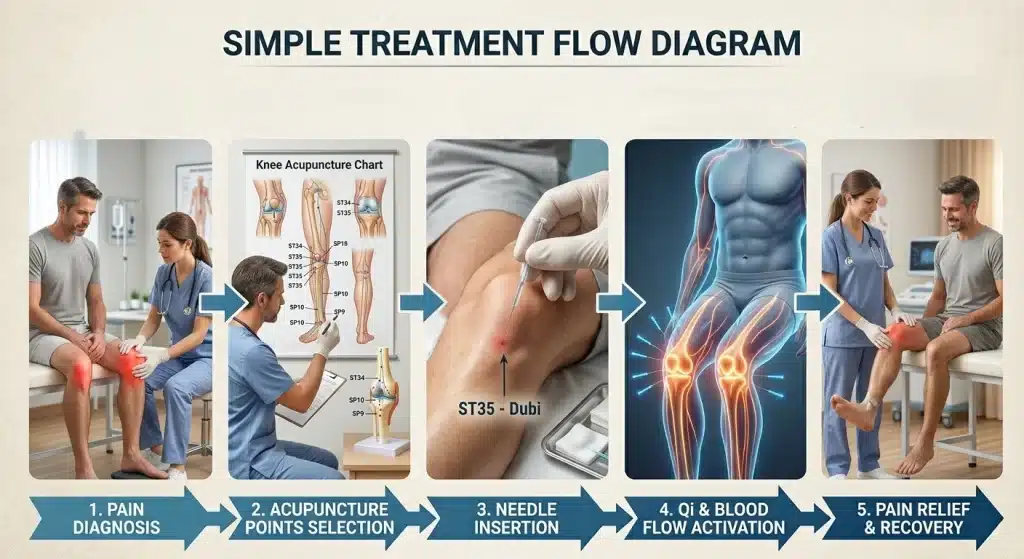
Simple Treatment Flow Diagram
What Happens During a Session?
- Consultation with a TCM physician
- Diagnosis based on pulse, tongue, and symptoms
- Needle insertion (usually painless)
- 20–30 minutes relaxation
- Post-treatment advice
Pro Tip: Consistency matters, most patients see results after 3–6 sessions.
Benefits of Acupuncture for Knee Pain
Short-Term Benefits
- Immediate pain relief
- Reduced swelling
- Improved joint flexibility
Long-Term Benefits
- Strengthens joint function
- Prevents recurring pain
- Enhances overall mobility
Comparison Table: Acupuncture vs Conventional Treatment
| Treatment Type | Pain Relief Speed | Side Effects | Long-Term Benefit | Invasiveness |
|---|---|---|---|---|
| Acupuncture | Moderate | Minimal | High | Non-invasive |
| Painkillers | Fast | Moderate | Low | Non-invasive |
| Physiotherapy | Moderate | None | High | Non-invasive |
| Surgery | Slow | High | High | Invasive |
Scientific Evidence and Case Insights
Research supports the effectiveness of acupuncture for knee pain:
- A study published in the Annals of Internal Medicine found that acupuncture improved pain and function in patients with osteoarthritis of the knee.
- Clinical trials show up to 50% reduction in pain scores after consistent treatment.
Real Case Example
A 55-year-old patient with chronic knee osteoarthritis underwent:
- 2 sessions/week for 4 weeks
- Combined acupuncture + herbal therapy
Results:
- Pain reduced by 60%
- Walking distance improved significantly
- Reduced reliance on pain medication
Who Should Consider Acupuncture for Knee Pain?
Acupuncture is suitable for:
- Elderly individuals with arthritis
- Athletes with sports injuries
- Office workers with chronic stiffness
- Patients seeking drug-free pain relief
When to Be Cautious
- Severe structural damage (may require surgery)
- Acute infections or swelling
- Pregnancy (requires specialized care)
What to Expect from Acupuncture Treatment in Singapore
If you’re considering professional care, clinics like G&G TCM provide structured treatment plans tailored to your condition. You can explore more about their approach here: acupuncture treatment in chinatown.
Typical Treatment Plan
- Initial consultation: 20–30 minutes
- Treatment frequency: 1–2 times per week
- Duration: 4–8 weeks depending on severity
Cost Range in Singapore
- $60–$150 per session
- Package deals often available
Why Choose a Professional TCM Clinic Like G&G TCM?
G&G TCM positions itself as a holistic wellness provider, focusing on:
- Experienced TCM physicians
- Customized treatment plans
- Integration of acupuncture, herbal medicine, and Tuina
- Convenient Chinatown location
Their Expertise Covers:
- Musculoskeletal pain (knee, back, shoulder)
- Chronic conditions (arthritis, fatigue)
- Preventive wellness care
This integrated approach ensures not just pain relief, but long-term healing and balance.
Step-by-Step Guide: How to Start Acupuncture for Knee Pain
- Identify your symptoms and duration
- Book a consultation with a licensed TCM clinic
- Get a personalized diagnosis
- Commit to a treatment schedule
- Track your progress weekly
Conclusion: Is Acupuncture for Knee Pain in Singapore Worth It?
If you’re dealing with persistent knee discomfort, acupuncture for knee pain in Singapore offers a proven, natural, and effective solution. Instead of masking symptoms, it works to restore balance and promote healing from within.
At G&G TCM, you’re not just getting treatment, you’re getting a personalized recovery journey guided by experienced practitioners who understand both traditional and modern approaches to pain management.
FAQs Section
Does acupuncture really work for knee pain?
Yes, many studies and patient cases show significant pain reduction and improved mobility, especially for osteoarthritis.
Is acupuncture painful?
No, the needles are extremely thin. Most patients feel minimal discomfort or a slight tingling sensation.
How many sessions do I need?
Typically 3–6 sessions for noticeable results, but chronic conditions may require longer treatment.
Is acupuncture safe?
Yes, when performed by licensed professionals using sterile needles, it is very safe with minimal side effects.
Can acupuncture replace surgery?
It depends on the severity. For mild to moderate conditions, acupuncture can delay or even avoid surgery.